
A homeowner recently contacted me after a frightening encounter with a cleaning firm who climbed onto her roof without permission and attempted to pressure her into agreeing to work immediately.
Recently I was contacted by an old acquaintance who had just had a very unpleasant experience with a cleaning firm. She remembered that I carry out similar work and got in touch to ask whether the quote she had received sounded reasonable. More importantly, she wanted to explain what had happened.
The story immediately raised several red flags.
At first, the men appeared professional with a van and signage. She had actually approached them herself while they were driving through her area. They had pulled into a nearby cul-de-sac of bungalows and she briefly spoke to them there. This kind of interaction isn’t unusual — many local service businesses pick up work this way.
However, this is where the cracks started to appear.
She explained that she was on her way out at the time, so they agreed to meet later at her home to properly discuss the job. She took one of their leaflets, gave them her phone number, and arranged for them to come back at 2pm.
At 1:30pm, however, she received a phone call saying they were already outside and had “done a sample”.
Concerned, she rushed home.
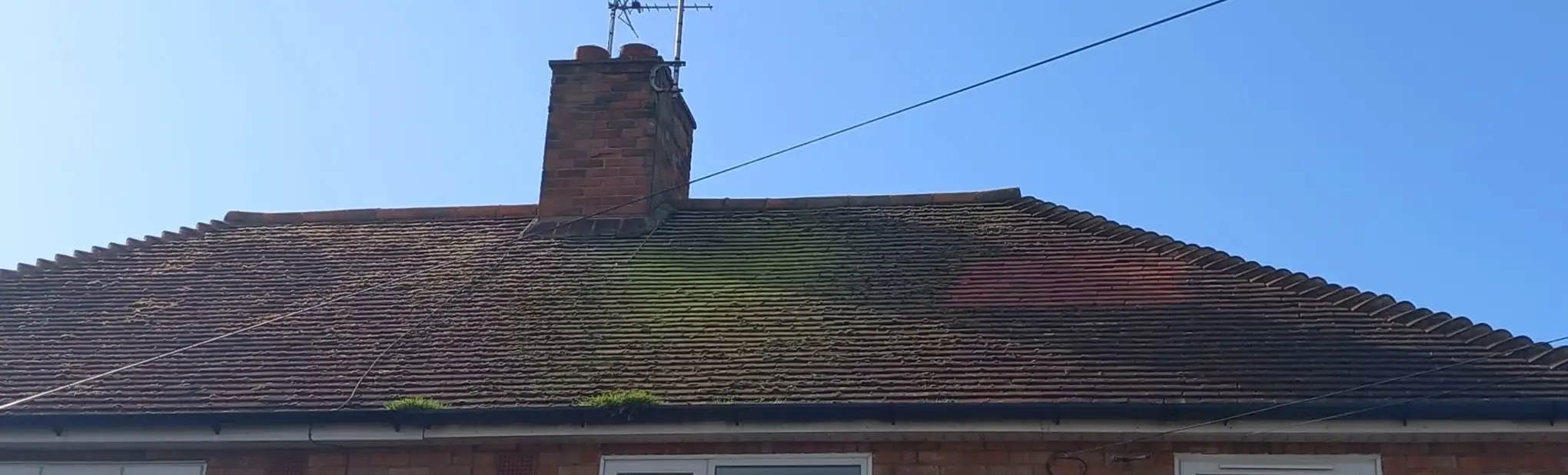
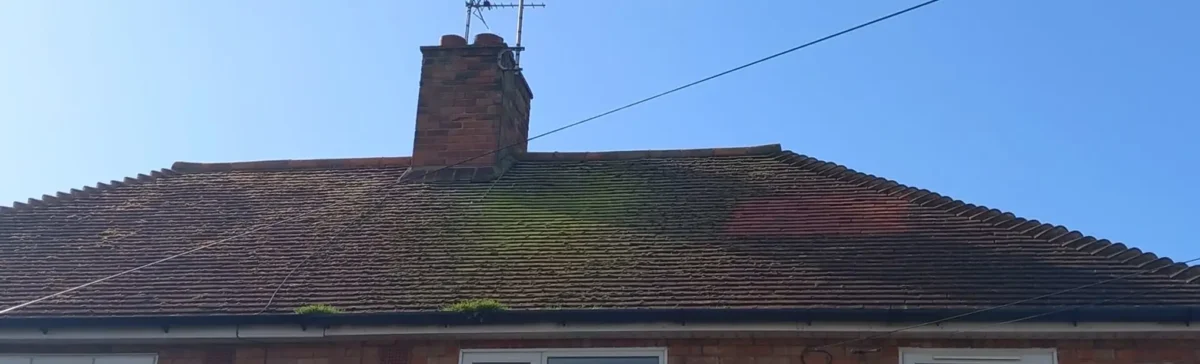
When she arrived, she discovered that the two men had already put ladders up and climbed onto the roof without permission. They had carried out a small “sample clean” and immediately began discussing the work.
At this point, the pressure tactics began.
The two men positioned themselves separately on the property. One of them became confrontational and stood close, pressing for an immediate decision. The other moved around the driveway and near her car rather than standing with his colleague.
Individually these actions might seem minor, but together they created an uncomfortable situation where she felt pressured and unsettled on her own property.
When she hesitated, the price they had verbally stated was suddenly reduced by £450 on the spot — roughly a third of what had originally been claimed.
Additional promises followed — claims that they would also clean the patio and apply a chemical treatment to the roof. When she asked to see the chemicals that would supposedly be used, they refused to show them.
When she said she would need to obtain another quote before agreeing to anything, the tone changed quickly.
The response became defensive and aggressive, including comments such as:
“You’ve wasted my time.”
“I need reimbursing for fuel.”
At this point she realised something was very wrong.
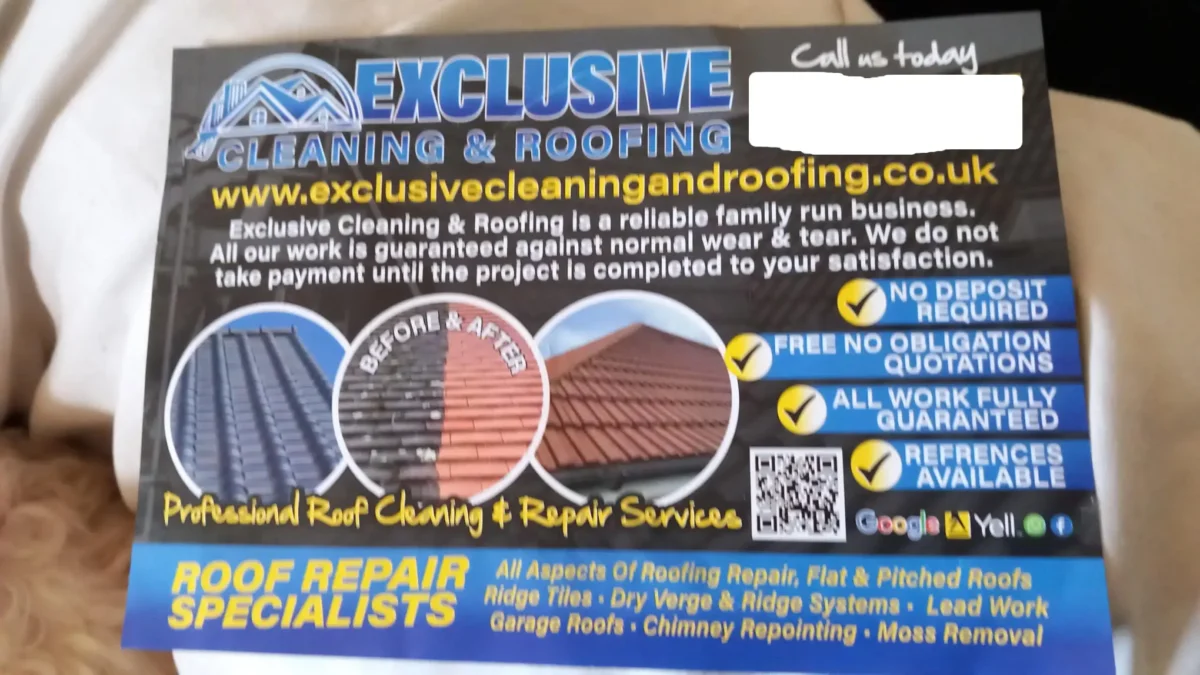
When she later told me the story, I asked whether they had left a leaflet. She sent me a photo of it along with a picture of the section of roof they had “sample cleaned” without permission.
Leaflet Left by the Firm
At first glance the leaflet looks convincing. But look closer — the advertised website does not exist, the social media icons lead nowhere, the QR code does not work, and the only contact details provided are mobile phone numbers.
The Illusion of Credibility
One of the most important things to understand about situations like this is how easily credibility can be manufactured.
In this case the van had signage and the leaflet appeared convincing at first glance. It contained a website address, several familiar trust icons, and even a QR code. To most people, these details create an immediate psychological assumption that the business must be legitimate.
But when those details were checked more closely, they quickly fell apart.
The advertised website did not exist. The Google and Facebook icons led nowhere. Even the QR code failed to work, all that was available were two mobile numbers.
In other words, the leaflet had been designed to create the appearance of an established company, but without leaving behind any real trace that could be verified later.
This is an important distinction.
Another detail worth noting is that the leaflet listed only mobile phone numbers as contact details. While there is nothing inherently wrong with a business using a mobile number, it does make it much harder to verify who is actually behind the business.
Mobile numbers can be obtained very easily and do not necessarily require the kind of fixed registration or traceability that a landline business number might provide. In practice, this means someone can obtain a number, print marketing material, and operate under a name that leaves very little trace if problems arise.
When a business has no verifiable website, no working online presence, and only mobile numbers as contact details, it becomes much easier for that operation to disappear and reappear elsewhere under a different name.
A genuine business leaves a paper trail. There will usually be a functioning website, verifiable contact details, past work, and some form of online presence that allows customers to confirm who they are dealing with.
When none of those things exist, it becomes very easy for a company operating this way to simply disappear and reappear elsewhere under a different name.
That is why it is always worth taking a few minutes to verify what you are being shown.
Professional graphics, logos and icons can make something look credible — but credibility only really exists when the information behind them can actually be checked.
Professional branding can be printed in an afternoon.
A genuine business reputation takes years to build.
Warning Signs to Watch For
Situations like this often follow a similar pattern:
- Turning up earlier than the agreed appointment time
- Carrying out “sample work” without permission
- Quoting a very high price and then suddenly dropping it
- Offering extra work or “special deals” on the spot
- Refusing to show products or explain their methods
- Becoming defensive or aggressive when you ask for time to think
A genuine professional will never pressure you into making an immediate decision and will always respect your property and your time.
The Importance of Written Quotes
One of the biggest differences between legitimate tradespeople and pressure-based operators is how the price is presented.
In this situation, everything was done verbally. A figure was mentioned, and when the homeowner hesitated the price was immediately reduced by £450, roughly a third of what had originally been claimed.
When prices can change that quickly, it raises an obvious question:
What would stop the price changing again later?
Without anything written down, there is no clear record of what was actually agreed. A price mentioned verbally can easily become something different once work has begun.
Additional charges, “extra work”, or unexpected materials can suddenly appear after the job is finished. Without written confirmation of the original agreement, the homeowner has very little protection if the price is disputed.
This is why legitimate businesses almost always provide written quotations or invoices, giving both parties a clear record of the agreement.
Without that record, homeowners are relying entirely on what was said in conversation — and that can quickly become disputed.
If someone is asking you to agree to significant work on the spot without any written quote or documentation, the safest option is usually the simplest one:
Take a step back and get a proper written quote first.
Are Roof Cleaning Pressure Tactics a Scam?
Not every company offering roof cleaning is dishonest. Many legitimate businesses provide careful cleaning services, written quotes, and clear explanations of the work being carried out.
However, the situation described above contains several warning signs commonly associated with rogue trader tactics.
These include:
- Carrying out work without permission
- Attempting to pressure homeowners into immediate decisions
- Changing prices verbally during the conversation
- Refusing to provide written quotes or documentation
- Presenting marketing material that cannot be verified
When these signs appear together, homeowners should treat the situation with caution and take time to verify who they are dealing with.
A legitimate company will welcome questions, provide written quotes, and allow customers time to make an informed decision.
Can Roof Cleaners Start Work Without Permission?
No. A contractor should not begin work on a property without the homeowner’s permission.
In some cases rogue operators may attempt to carry out a small “sample clean” and then use that as leverage to pressure a homeowner into agreeing to further work. This tactic is designed to create a sense that the job has already begun.
Homeowners should never feel obligated to pay for work that was carried out without their consent.
If work starts without permission, it is reasonable to refuse further work and ask the individuals to leave the property.
A Simple Rule to Remember
If a price only exists in conversation, it can change just as easily in conversation.
If it’s not written down, it isn’t really agreed.